Neo4j: Building Social Graphs for Friends
A comprehensive guide to using Neo4j for building social network graphs and relationship modeling.
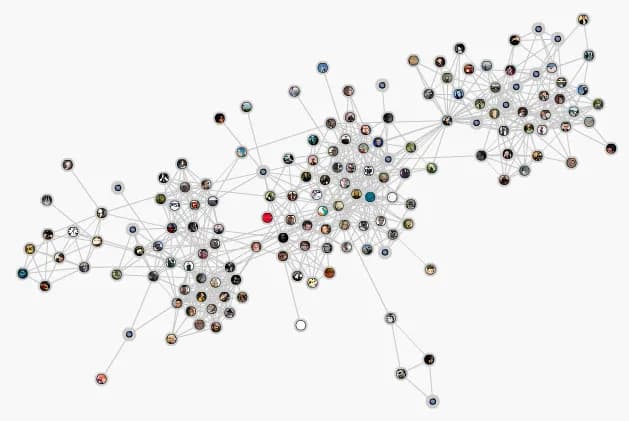
“How do I find friends?”
“Okay, now how do I find friends of friends?”
“And why is this query suddenly slow?”
That was me, building a small app that mapped relationships based on phone contacts. Simple idea. Dangerous execution.
The Problem Was Not Data. It Was Relationships.
The app logic was straightforward.
If: person1 has person2 in contacts and person2 has person1 in contacts
Then they are friends.
Sounds easy. Until you try doing this efficiently in a relational database and start joining tables like your life depends on it.
It did.
Enter Neo4j
Neo4j does not store tables. It stores relationships as first class citizens.
That alone changed everything.
Instead of forcing relationships into rows and columns, I modeled the problem exactly how it existed in real life.
Person nodes. Relationships between them. That's it.
How I Modeled Friendship
Each person is a node.
Each contact is a relationship.
If both sides had each other as contacts, friendship existed naturally in the graph.
Conceptually, it looked like this:
person1 connects to person2
person2 connects back to person1
Boom. Friendship.
No join tables. No mental gymnastics.
Finding Friends Became Boring
To find direct friends, I simply followed the relationships.
To find friends of friends, I went one hop further.
That was it.
The graph did the heavy lifting. Neo4j traversal felt like cheating compared to SQL.
Why Neo4j Fit This Use Case Perfectly
Relationships Are Stored, Not Calculated
In Neo4j, relationships are not something you reconstruct with queries. They already exist.
That makes traversals fast and predictable, even as the graph grows.
Friends of Friends Is a Natural Question
In relational databases, friends of friends feels like a trick question.
In Neo4j, it feels obvious.
“How many hops do you want?” One. Two. Three.
The database understands the question.
Final Thoughts
Neo4j did not just solve my problem.
It changed how I think about data modeling.
For relationship heavy use cases like social graphs, friend discovery, and network analysis, forcing everything into tables feels unnecessary.
Sometimes the best database is the one that matches how humans already think.
People connect to people. Neo4j gets that.